
Best Domain Name Registration in Singapore: 3 Options
Compare three options for domain name registration in Singapore, including .sg eligibility, renewal checks, DNS setup and what to ask before you register.

Written by Thiam Hock NgFounder
10 min read
A .sg address can help local clients recognise your business, but the registration is only the start. Domain name registration in Singapore comes with eligibility checks, renewal terms and DNS choices to review. Here are three providers to consider, plus the checks that help you avoid a website handover headache.
Table of Contents
- AsiaRegister: clear published .sg pricing and realtime registration
- QUAPE: a registrar option to assess for domain protection and support
- Vodien: a Singapore-based option to investigate for domain and DNS support
- Checks before you register
- Frequently asked questions
- Conclusion
1. AsiaRegister: clear published .sg pricing and realtime registration
AsiaRegister is a domain registrar with a published .sg price and realtime registration as its differentiator. It’s worth considering if you want to see the annual domain cost before you place an order.
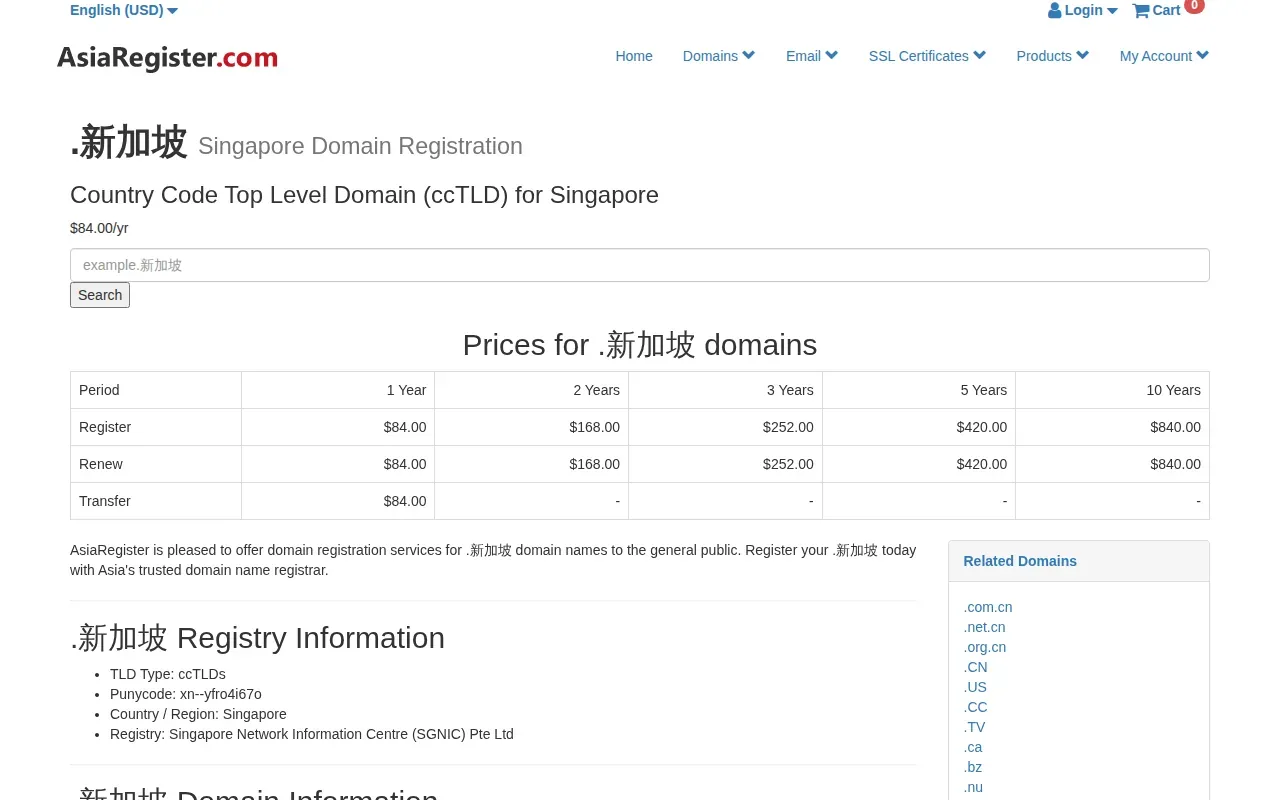
The verified price is S$84 for one year. The renewal price is also S$84 per year. That makes it easier to work out the direct domain cost beyond the first term, rather than judging an offer on its first-year figure alone.
Realtime registration is the point to weigh against your launch plans. If your business name is settled and your documents are ready, a faster registration process may help you move on to DNS setup sooner. It doesn’t replace eligibility checks, though. A .sg domain may require details that connect the registrant to Singapore.
SGNIC sets the rules for Singapore domain names. Your registrar’s instructions should also tell you what information to provide.
Before you pay, confirm that the name is available and that it matches the business name clients already know. If your chosen name is a registered trade mark in Singapore, additional information may be required. That’s a good reason to check names and rights before building the address into signs, email or printed materials.
Then check the renewal date and who will manage the account. A domain can be registered with one provider while the website is hosted elsewhere. Keep the account login and renewal notices with someone who’ll still be responsible for them next year.
AsiaRegister suits a buyer who values a clear annual price and wants registration described as realtime. If you need help during setup, ask the provider how support works before you register; price and registration speed don’t tell you what happens when a DNS change goes wrong.
2. QUAPE: a registrar option to assess for domain protection and support
QUAPE is a registrar option for businesses looking at .sg or .com.sg. Its guidance puts attention on eligibility, verification and the difference between a domain name and the services that use it.
That distinction matters. Buying the address doesn’t move your website or email into place. QUAPE explains that registration and hosting are separate, and that you can point DNS to a compatible hosting or email provider of your choice. If a supplier is setting up your site, decide who will make the DNS changes and who will keep access to the domain account.
QUAPE describes its registration and renewal prices as annual, with GST excluded, and asks customers to compare the two prices separately. Use that distinction when you review the catalogue: the initial term and the renewal term are different parts of your ongoing cost. Also check the registration term, tax treatment and any transfer fee that applies to the extension you want.
Eligibility depends on the extension and the registrant. For .sg and .com.sg, check the current registry requirements rather than assuming every business or contact can register every ending. Follow the verification steps and deadlines provided for your own application.
Some registration processes can ask for identity documents or a signed form. If the registrar asks for a named administrative contact, make sure that person expects any verification message and can act promptly. Don’t enter made-up contact details to get through the order form; inaccurate records can hold up approval or later account changes.
A domain transfer is separate from a website or mailbox move. A transfer changes the registrar handling the domain, but it doesn’t by itself move site files or email data. If you’re transferring an existing domain, agree on DNS continuity before starting so visitors can still reach the site during the change.
Pro Tip: Save the registrant details, renewal date and DNS provider in a shared business record. Give access to a second trusted person, so one staff change doesn’t leave the domain account unattended.
QUAPE is a fit to assess if you want the registration, renewal and DNS responsibilities set out as separate decisions. Before ordering, confirm the current requirements for your chosen extension and make sure your team knows who owns each account.
3. Vodien: a Singapore-based option to investigate for domain and DNS support
Vodien, by Vodien Internet Solutions Pte Ltd, is a Singapore-based provider to investigate if you want to ask about domain registration and the support available after purchase.
For a service business, the address is part of how clients find and recognise you. A short, clear domain that matches your business name is easier to share in a referral email or on an invoice. A .sg ending can signal a Singapore focus, while .com.sg may suit an eligible commercial organisation. The right choice depends on your intended identity and whether you meet the registry’s rules.
Ask what support covers before choosing a provider. Can the team help you point DNS to a separate host? What account details will you need to make changes later? If a staff member leaves, can another authorised person regain access? These are useful questions for any provider, especially when your website and domain are managed in different places.
Once the registration is active, your domain needs DNS records that direct visitors to your website host. Your host should give you the record values or name server details to enter at the registrar. Keep a note of what changed and when. If email uses the same domain, check the email records too before editing DNS, or staff may lose access to mail.
Use this small decision table to shape a conversation with the provider. It doesn’t assume that one setup fits every business.
| Decision point | What to confirm with Vodien | Why it matters |
|---|---|---|
| Support | What help is covered, and how do you reach the team? | You’ll know who to contact if a setup task stalls. |
| DNS | Can you point the domain to a separate website host or email provider? | Your domain and hosting may sit with different providers. |
| Renewal | What is the renewal price and how is the renewal handled? | The first term isn’t the full cost of keeping the address. |
| Account control | Who will hold the login and receive account notices? | The business needs ongoing access to its own domain. |
Domain registration is one piece of a working website. If you also need someone to keep the site hosted and cared for, HockWorks has hosting and ongoing website care as a separate service. It doesn’t replace your registrar; it can help you clarify who handles the site after the domain points to it.
Checks before you register
Don’t choose on the first-year price alone. Before submitting a .sg or .com.sg application, check the domain name, eligibility and account terms. Then make a simple handover plan for the person who will connect the domain to your site.
- Confirm eligibility. Singapore domain extensions have registry requirements. Check the current rules for your extension and registrant type before paying.
- Prepare the right details. Have accurate registrant and administrative-contact information ready. Be prepared for verification steps, which can include an identity document or signed form in some cases.
- Check rights to the name. Search for existing trade marks and other business names that could cause a dispute. A domain being available doesn’t prove that using it is safe.
- Compare renewal terms. Record the annual renewal price and any tax or transfer costs that apply. Set a renewal reminder in a business-owned calendar.
- Plan DNS changes. Ask your host for the exact values to enter. Make a note of existing email settings before changing records.
- Keep account control. Use a business-controlled email address for the account and store access details safely. Make sure another authorised person can reach the account if the main contact is away.
Also decide whether you want a local identity or a broader generic ending such as .com. A Singapore ending can make local focus plain to potential clients. A generic ending may better match a business that serves more than one market. Neither choice replaces clear site copy or a useful service page.
If your site already exists, test the domain change in a planned window. A domain registrar can manage the name, while your host controls the server that serves the website. HockWorks helps service businesses plan websites around the questions that shape an enquiry, but you’ll still want your registrar and host to agree on the technical handoff.
For the site side, SSL certificate renewal steps can help you keep the secure connection working after launch. Your domain, DNS and certificate each have a different job, so note who owns each task.
Key Takeaway: Pick a registrar after checking eligibility, renewal terms and support, then name one person to own the DNS handoff.
Pro Tip: Ready to get the website side sorted? Book a free 15-minute HockWorks Clarity Call to talk through what your site needs to do.
Frequently asked questions
Who can register a .sg domain?
A .sg registration has eligibility requirements tied to the registrant and local Singapore details. The exact requirements depend on the extension and the applicant, so check current SGNIC guidance before ordering. Your registrar may request accurate identity or business details, and an administrative contact may need to complete a verification step.
Do I need a Singapore company to buy a .sg domain?
You may not need a Singapore company in every case, but you must meet the eligibility rules for the exact domain ending. Requirements can differ by registrant type and extension. Confirm the current SGNIC rules and the registrar’s application instructions before you pay, rather than relying on an old checklist or a general claim.
How do I connect my domain to my website?
Ask your website host for the DNS records or name servers you need, then enter those details in the domain account. If your email uses the same domain, check its DNS records before making changes. Registration and hosting are separate services, so one provider may not automatically set up the other.
Is .sg better than .com for a Singapore business?
A .sg domain makes a Singapore focus clear, which can help local clients recognise the business. A .com address may suit a company with a wider market or an established name that uses that ending. Choose the address that fits your audience, confirm you’re eligible, and check that the name is easy to say and remember.
What should I check before renewing a domain?
Check the renewal price, renewal date and account contact details. Make sure the business still controls the login and the email that receives notices. Review the DNS settings too if your website host or email provider has changed. Keep renewal reminders somewhere more than one authorised person can access.
Conclusion
AsiaRegister is the clearest choice here if published annual pricing and realtime registration are your main tests. Compare renewal terms and support before you commit. If you also want help making your site explain why clients should choose you, book a free 15-minute call with HockWorks and agree on one next step.