
Web Development Companies in Singapore to Compare
Compare web development companies in Singapore by copy, scope, search setup, ownership and support to find a partner for your service business.


Written by Thiam Hock NgFounder
10 min read
A website can bring people to your business and still leave them unsure why they should choose you. This shortlist of web development companies in Singapore shows who each may suit, what to check and where the trade-offs sit.
Table of Contents
- HockWorks
- OOm: a marketing-led option for search and paid campaigns
- MediaPlus Digital: SME experience and familiar commerce platforms
- Webby SG: SEO, website work and Google Ads for SMEs
- pixel: fast, search-optimised websites for Singapore businesses
- Questions to ask before signing
- FAQ
- Conclusion
1. HockWorks
HockWorks provides website development for founder-led service businesses in Singapore, with projects planned around how a buyer makes a decision. It’s a fit if your site gets visits but fails to explain your value or bring in the right enquiries.
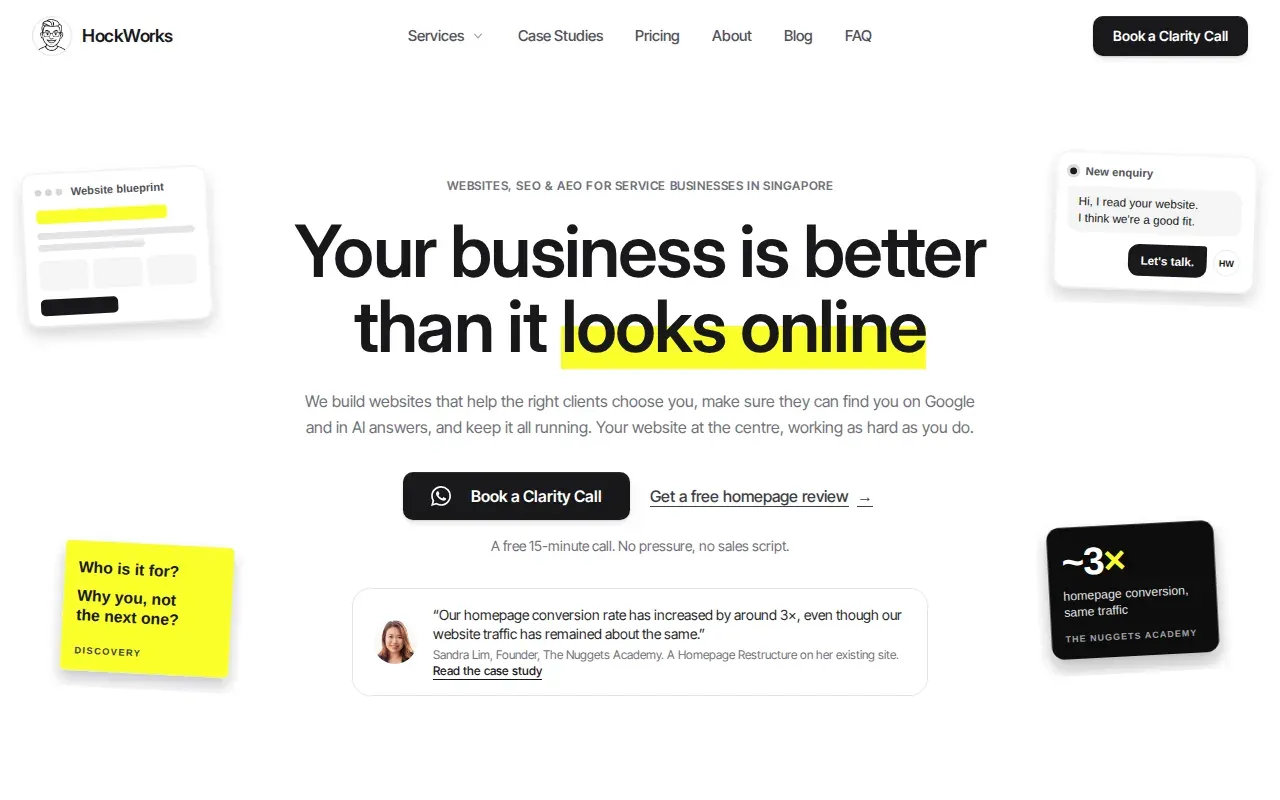
Work starts with a discovery phase. We map what clients need to know before they enquire, then write the copy before visual work begins. That gives each page a clear job, rather than asking a new layout to fix a vague message.
Website Development starts from S$1,800 as a one-time project. SEO & AEO starts from S$800 a month, while Managed Website is S$600 a year. A Homepage Restructure is quoted after a free 15-minute Clarity Call, where the project is scoped before work starts. You can review the website delivery and platforms service details before you decide.
The service mix also suits owners who need help after launch. HockWorks can restructure a current homepage without breaking what already ranks, work on visibility in Google and AI answers, or handle hosting and routine site care. Clear site content can help search engines understand a page. That’s a useful standard to discuss with any partner, not a promise of rankings.
For a sense of the work, HockWorks says research for Singapura Insurance started with buyer keywords. Its case study on The Nuggets Academy describes a homepage rewrite that kept its rankings. Those examples point to a decision-first approach, rather than a visual refresh as the starting point.
It may be less suitable if you compete mainly on price or need a large custom software build. The work is centred on service-business websites, their messaging and ongoing search visibility.
2. OOm: a marketing-led option for search and paid campaigns
OOm brings website work into a wider digital marketing mix. It may suit a business that wants to plan its website alongside SEO and paid search, rather than treat the site as a stand-alone build.
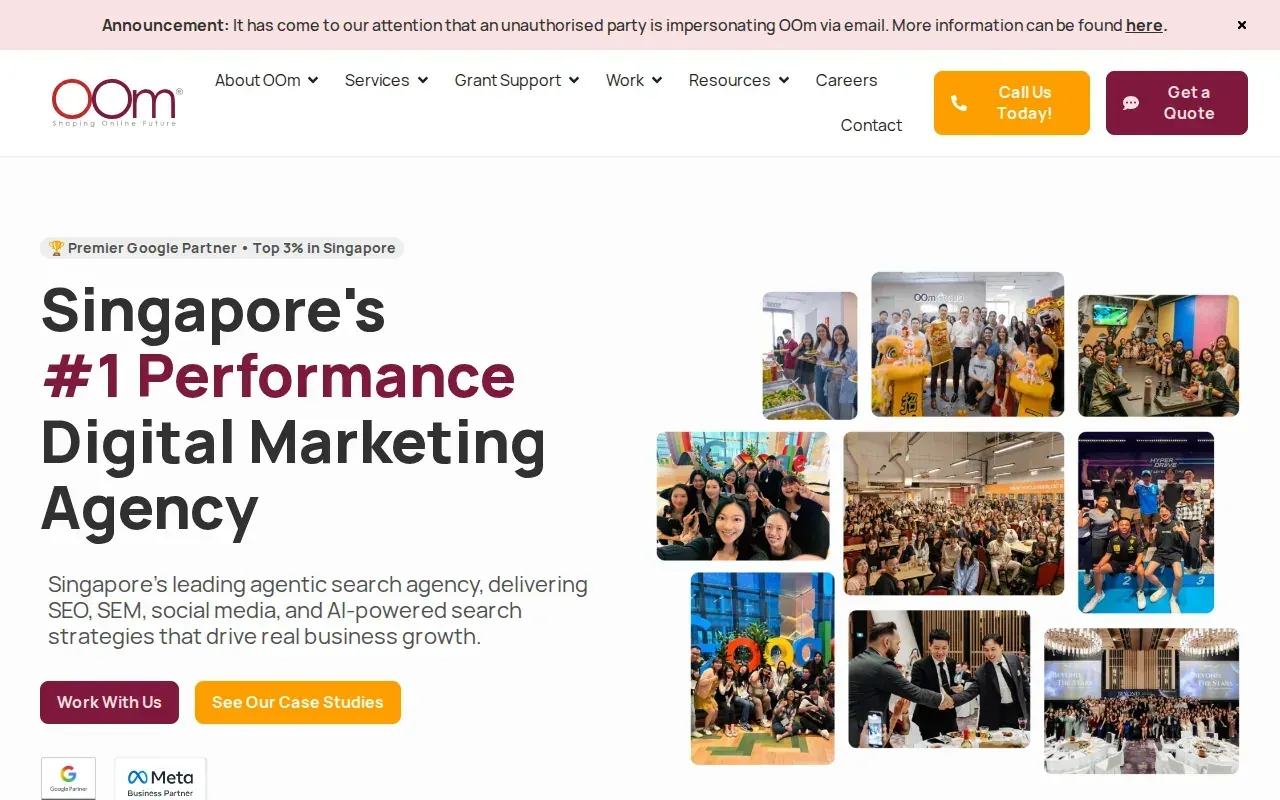
Its service focus includes site creation alongside SEO, search ads and AI-driven search. That mix can help if one team needs to connect the site with ongoing campaigns. For example, a service firm could discuss how a campaign landing page should answer the same questions as its search content.
The trade-off is that OOm’s approach is marketing-led. A website build may sit within a broader retainer, so ask what the project includes on its own. Get clear on who owns the page copy, what happens after launch and which ongoing services are optional.
Before you sign, ask the team to show how it will turn your offer into clear page content. If the proposal focuses on campaign activity, check that the site itself still has a defined scope and a handover plan.
3. MediaPlus Digital: SME experience and familiar commerce platforms
MediaPlus Digital works with Singapore SMEs and builds on WordPress, WooCommerce and Shopify. It may suit a business that wants a common content system or online shop, with search and marketing support in the same mix.
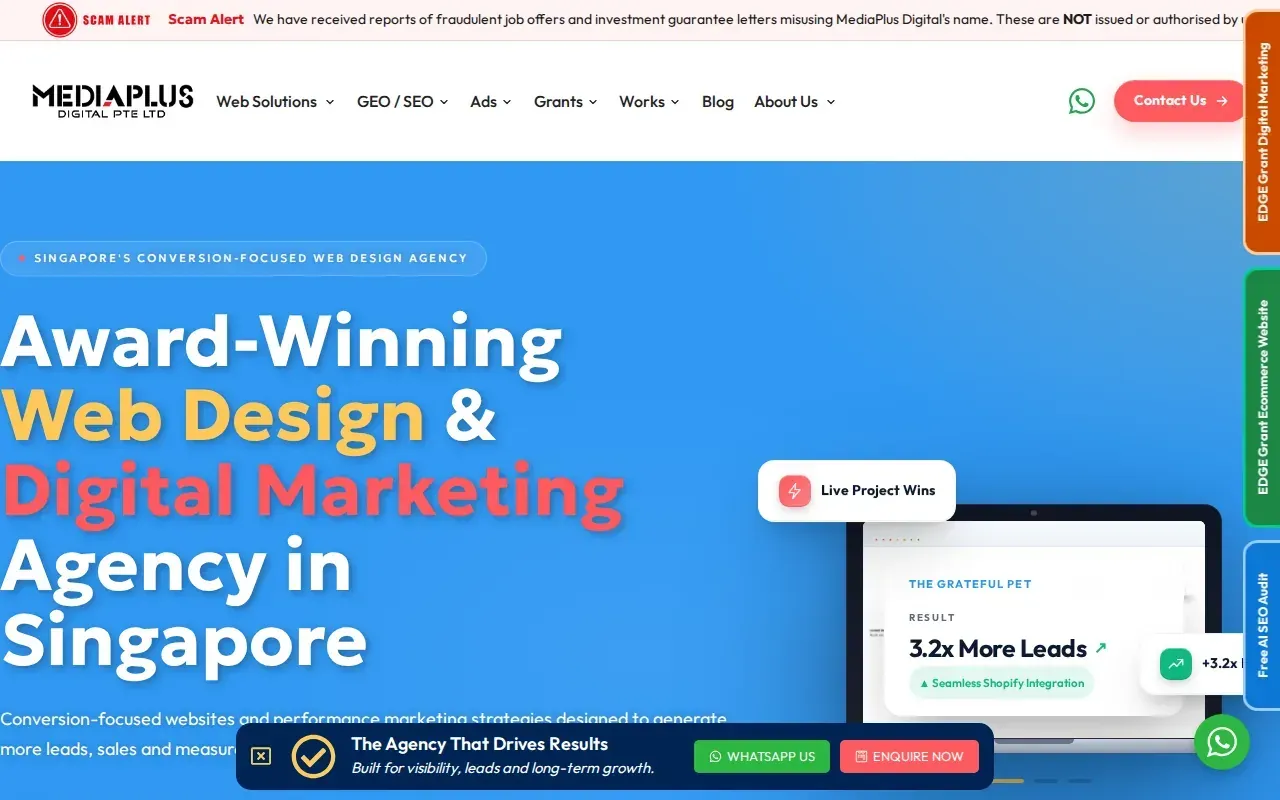
The company says it has worked with more than 1,000 Singapore SMEs since 2013. Its services include website builds, conversion work, SEO and paid social. Those areas can matter when a site needs more than a fresh look, especially if visitors reach the page but don’t take the next step.
Ask which platform fits your actual workflow. A tuition centre may need simple service pages and enquiry forms; an online shop may need product and payment flows. The right choice depends on what you need to update yourself and what your customers must do on the site.
MediaPlus Digital puts more emphasis on conversion optimisation than on a visual refresh. That’s a useful distinction if your current site looks dated, but the main problem is weak messaging or a confusing path to enquire. Agree on what the team will change and how you’ll judge whether the new pages work better.
4. Webby SG: SEO, website work and Google Ads for SMEs
Webby SG offers SEO, web design and Google Ads for Singapore SMEs, and its assistant, Webi, will walk you through.
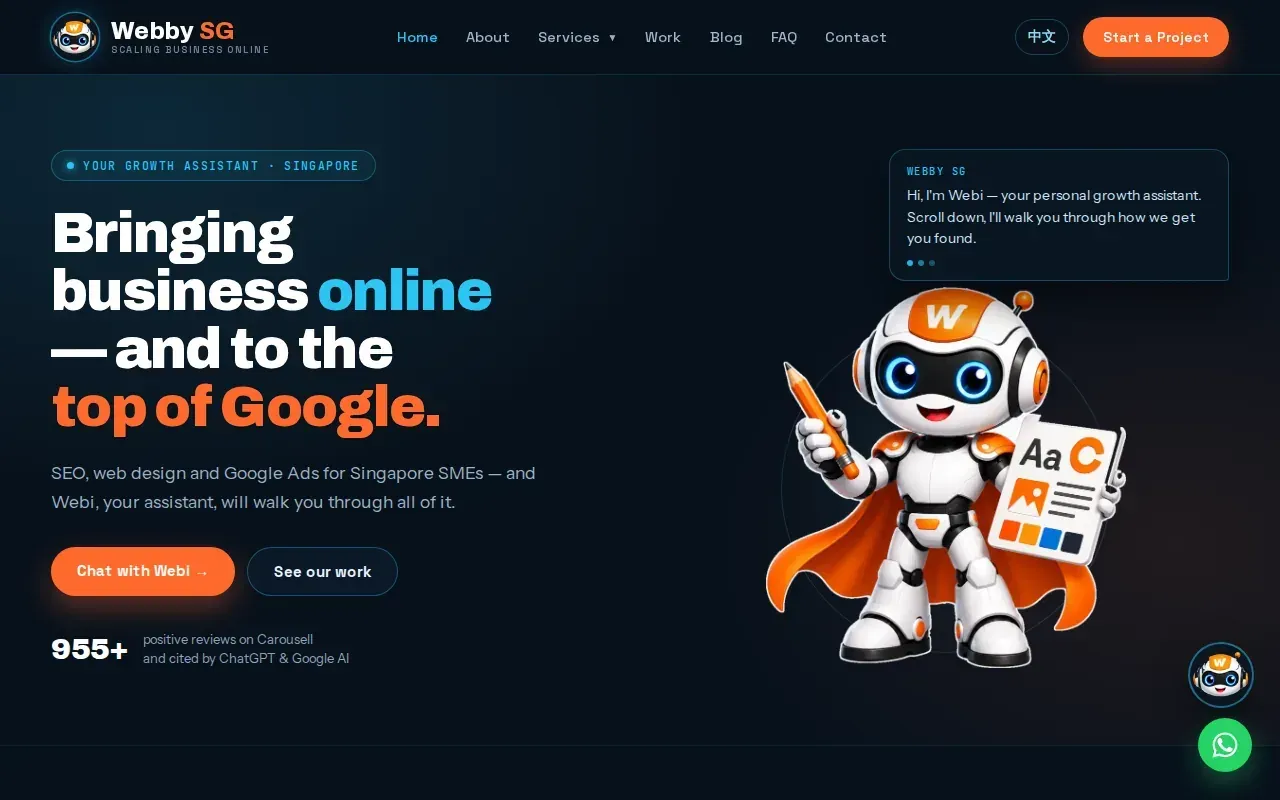
Ecommerce builds can use Shopify, WooCommerce or custom React. Page count alone doesn’t tell you who writes the content or how much setup your site needs.
Webby SG also describes its sites as mobile-first and says they include on-page SEO setup and Google Search Console submission. It has SEO and paid-ad services too, so ask which tasks sit within the build fee and which require an ongoing plan.
For a professional firm, ask for a proposal focused on the pages and actions your clients need, rather than accepting store features you won’t use.
Before you compare quotes, write down what you need to own at handover: the domain, site files, account access and final copy. Ask the provider to confirm each item in the agreement.
5. pixel: fast, search-optimised websites for Singapore businesses
pixel builds fast, search-optimised websites for Singapore businesses, with web development and SEO as its focus. It may suit an owner who wants search visibility to be considered as part of the website build.
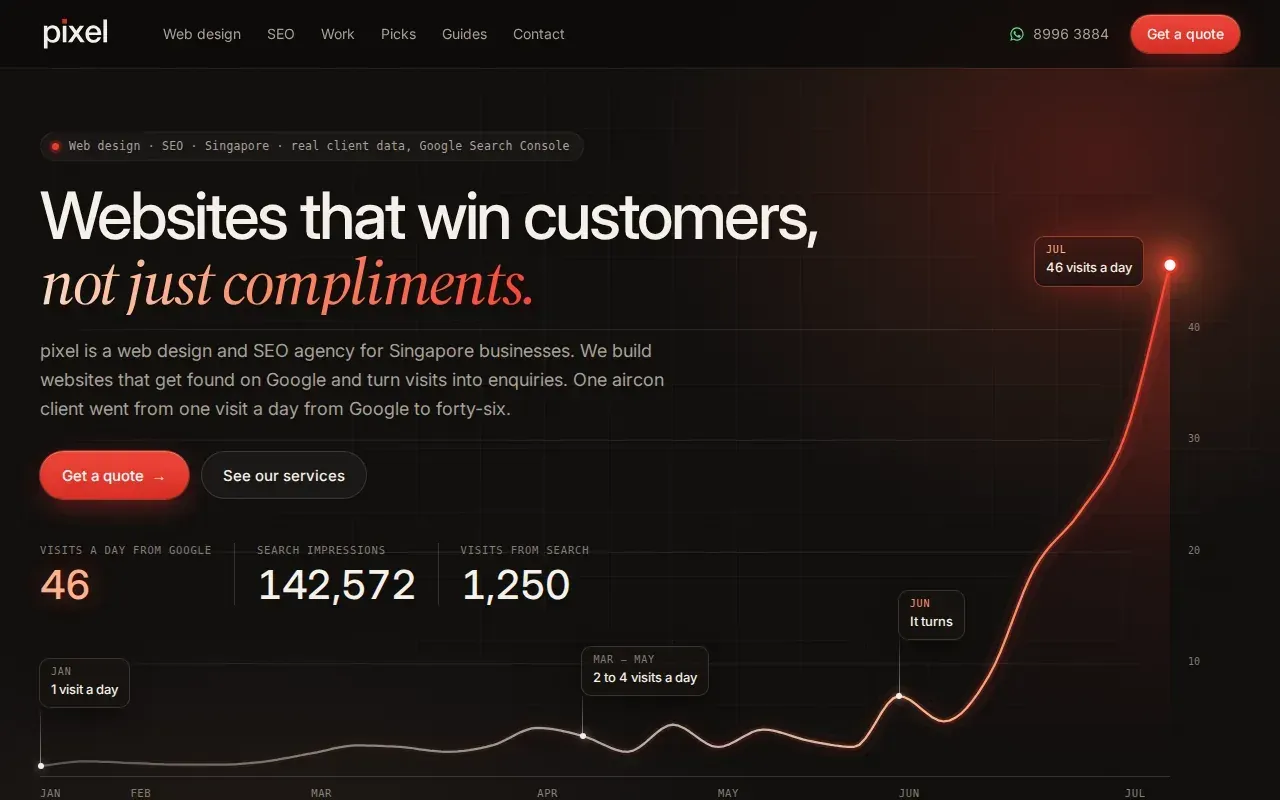
That combination is worth discussing early. Ask what “fast” means for your planned site and which parts of the build affect load time. Then ask how the team plans page content around the questions your clients ask, rather than relying on a general claim about search.
Platform fit matters too. If your staff already update pages or products in a content system, explain that before a proposal is written. Ask how the new site will handle your current content and what access you’ll have once the work is done.
Here’s a quick way to compare the options by the details stated about each one. Use it to shape follow-up questions, not as a substitute for a project scope.
| Company | Stated focus | Useful point to check |
|---|---|---|
| HockWorks | Service-business websites, SEO & AEO, and managed websites | How buyer research shapes the copy and page plan |
| OOm | SEO, search ads, AI-driven search and website work | Whether the build is a stand-alone scope or part of a wider retainer |
| MediaPlus Digital | SME websites, WordPress, WooCommerce and Shopify | Which platform fits your daily updates and sales flow |
| Webby SG | Website work, SEO and Google Ads | Which tasks and support sit inside the quoted build |
| pixel | Website development and SEO | How site speed and search needs are handled in your build |
For accessibility, ask the provider how it checks whether people can use the site with different needs and devices; you can also consult this resource.
Key Takeaway: Choose the partner whose process fits your main problem, then get copy, scope, ownership and post-launch care written into the proposal.
Questions to ask before signing
The right partner should be able to explain the work in plain terms. These five checks help you compare proposals without needing to become a developer or SEO specialist.
- Who writes the copy? Ask whether the provider will interview you, use your existing material or expect you to supply finished text. The copy should explain why a suitable client should choose you.
- What does the price cover? Ask for the page list, revisions, content work and launch tasks in writing. Check which services are one-off and which continue each month or year.
- What search work happens before launch? Ask how the team will handle page titles, redirects and search setup. Google Search Console submission is one detail to confirm, not a full search plan on its own.
- Who owns the site and accounts? Confirm who controls the domain, hosting and platform logins. Ask what files and access you’ll receive if you change providers.
- Can you see work for a similar business? Ask how the partner handled a comparable service, sales process or platform. A useful example explains the starting problem and the work done, not just a polished home page.
If you want a fuller list of questions and checks, the website partner selection guide covers scope, copy, SEO, proof, ownership, support and cost.
Post-launch support deserves its own line in the agreement. Ask who handles security updates, backups and small changes, and how you request help. HockWorks’ Managed Website service covers hosting, SSL, security updates, monitoring, backups and small changes for S$600 a year. You can compare the service scope with your own support needs before you commit.
Pro Tip: Ask each provider to show one page plan for your main service. You’ll see quickly whether the proposal starts with your buyer’s questions or with a template.
FAQ
How much does a business website cost in Singapore?
Website costs in Singapore depend on the number of pages, the content work and any shop or system needs. HockWorks’ Website Development starts from S$1,800. Compare the included work before treating quoted prices as like-for-like.
What should I ask a web development company before hiring?
Ask who writes the copy, what the quote covers, how search setup works and who owns the site accounts. Also ask what support is available after launch. These answers show whether you’re buying a defined project or relying on assumptions that could lead to extra work later.
Which platform is right for a Singapore service business?
The right platform depends on what your team needs to update and what a client needs to do online. WordPress may suit a content-led site, while WooCommerce or Shopify may fit a shop. Ask the provider to explain the choice using your pages and workflow, rather than naming a platform without context.
Do I need SEO when building a new website?
It’s sensible to plan search setup during the build, even if you won’t pay for ongoing SEO. Ask how the partner will handle page content, titles and any redirects from your old site. If you rely on Google for enquiries, also agree who will check the site after launch.
What should a website handover include?
A handover should make clear how you’ll access and manage the website. Confirm ownership of the domain and hosting accounts, plus the logins or files you’ll need if another provider takes over. Ask for the handover details in writing before work begins, not after launch.
Conclusion
For a Singapore service business whose site needs to explain its value and earn more suitable enquiries, HockWorks is a fitting option to assess. Compare its decision-first process with the other providers’ stated focus, then book a free 15-minute Clarity Call to scope your project and confirm the price before work starts. You can also review HockWorks pricing first.