Buyer Decision Guide
A practical guide on how to turn your website into a sales machine.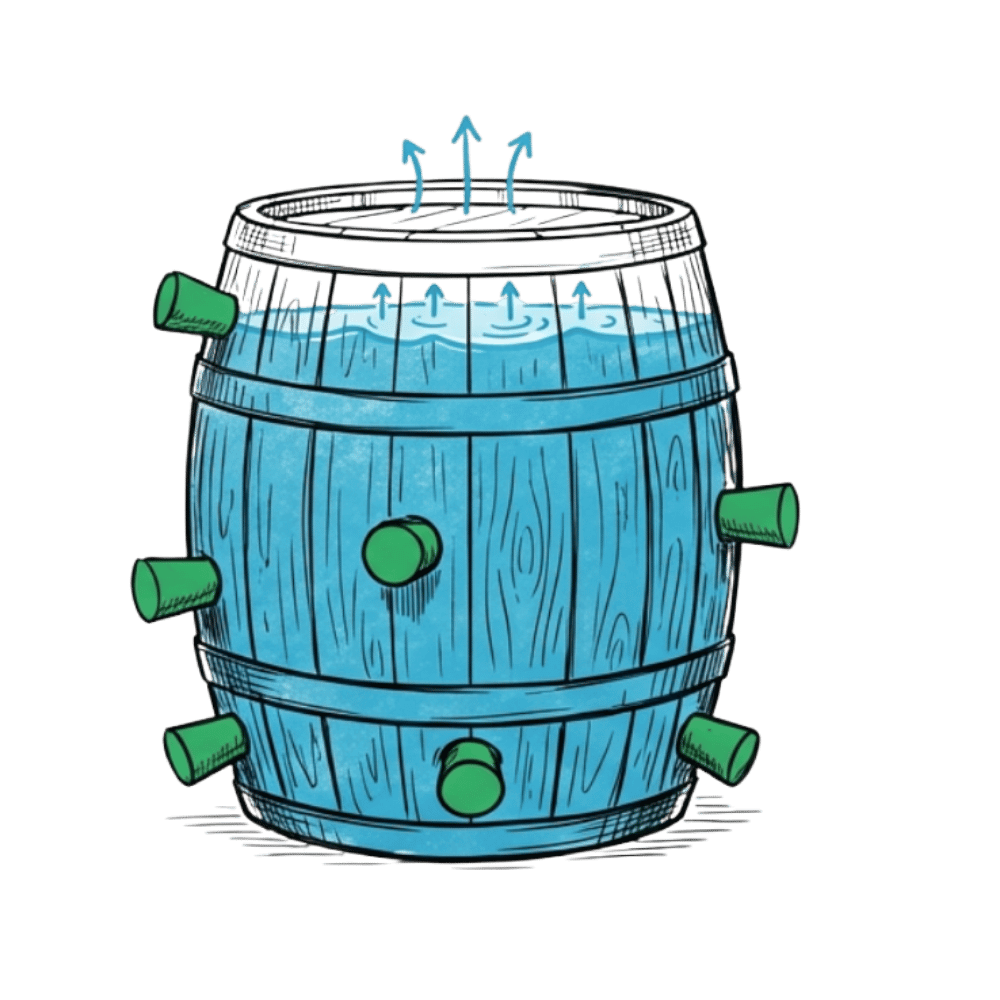
When a visitor lands on your website, they don't arrive empty-headed.
They arrive with questions.
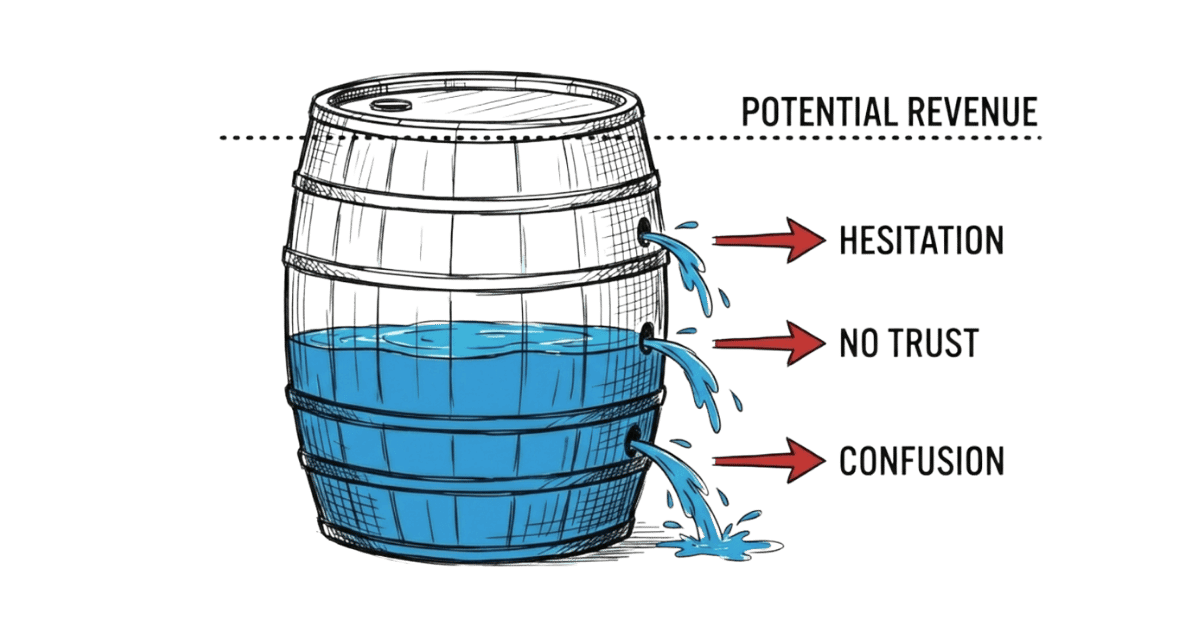
Each unanswered question adds a small pause. Each pause is friction. With enough frictions, they don't take the next step.
This is why adding more traffic often doesn't help.
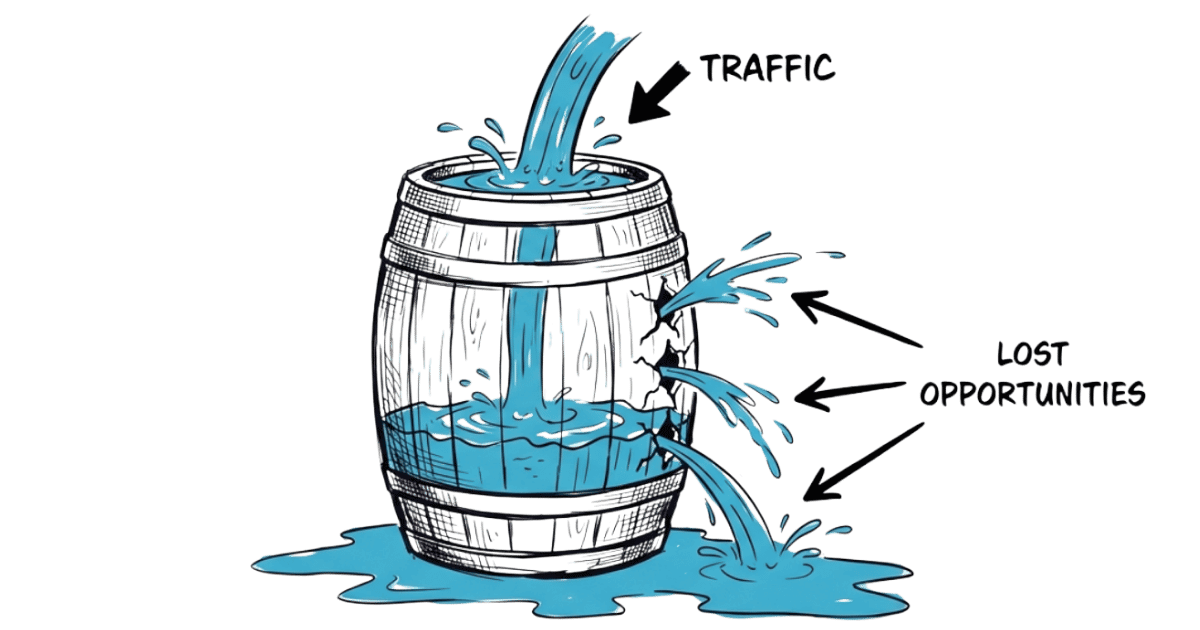
And here's the sneaky part:
Even if you're already getting enquiries, it doesn't mean your website can't do better.
Hesitation doesn't stop all enquiries. It just reduces them. And that's not what you want.
Once you see hesitation this way, the question isn't whether to act. It's how.
What actually helps (and what doesn't)
Hesitation is rarely fixed by
- more animations
- louder headlines
- "conversion hacks"
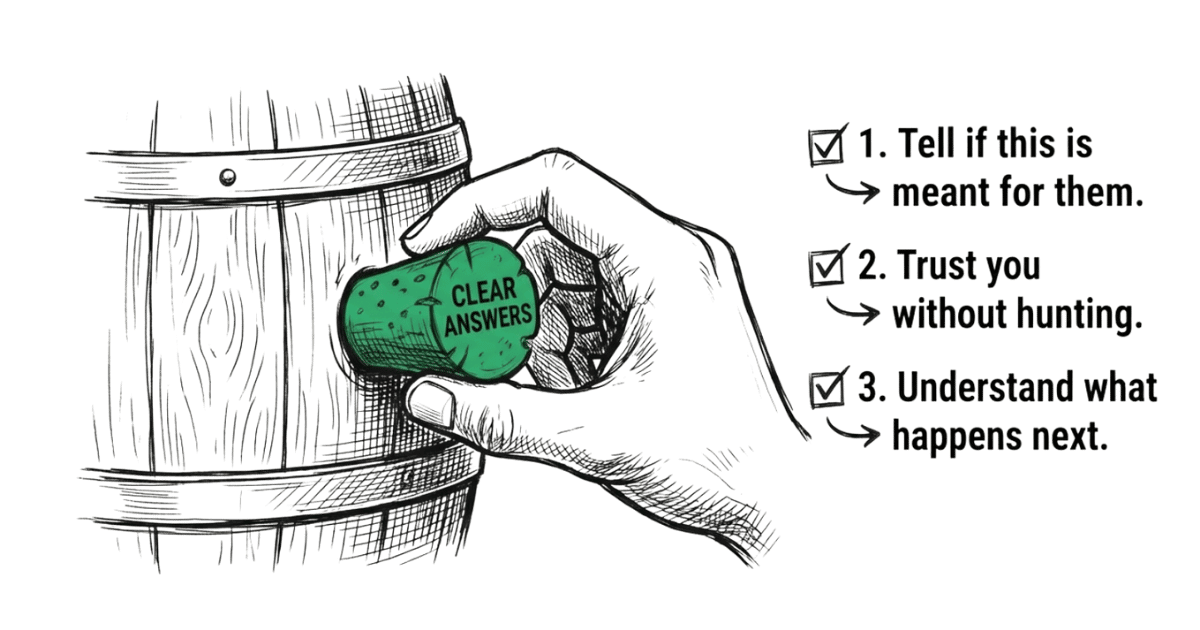
It's fixed when visitors can
- tell if this is meant for them
- trust you without hunting
- understand what happens next
That's it. Simple. Not easy.
If you want to work on this yourself: What to focus on
If you decide to DIY, don't start with a checklist of things to change. Instead, start with principles.
At HockWorks, we look at websites as a decision system with two jobs:
1. Remove friction for the right visitors
2. Add filters so the wrong visitors don't reach out
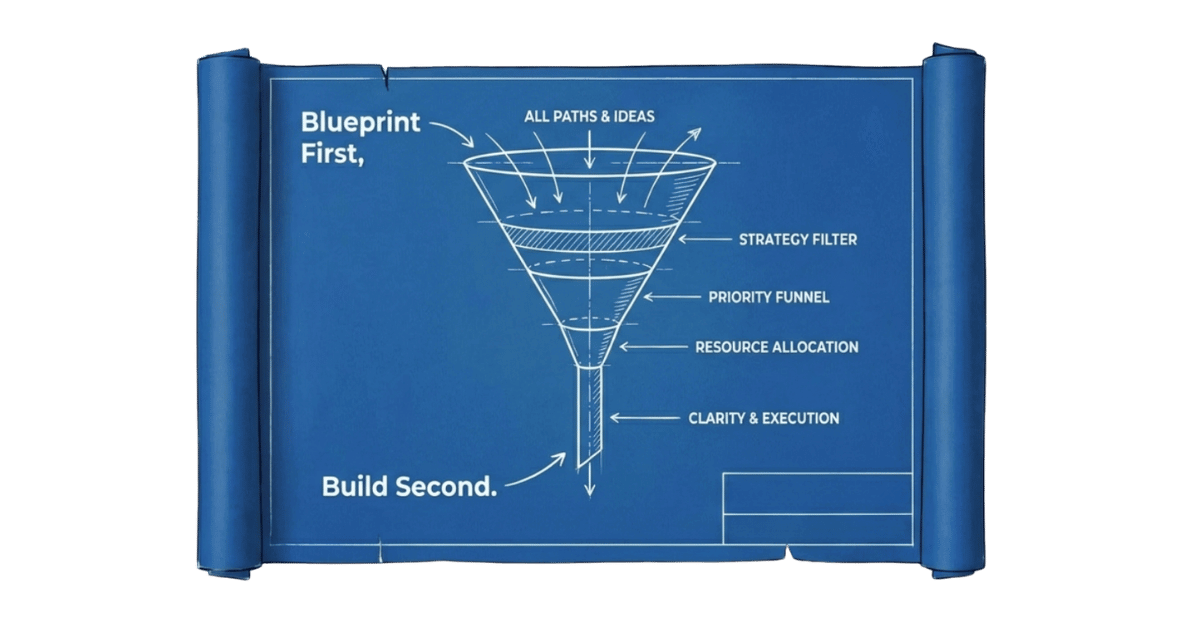
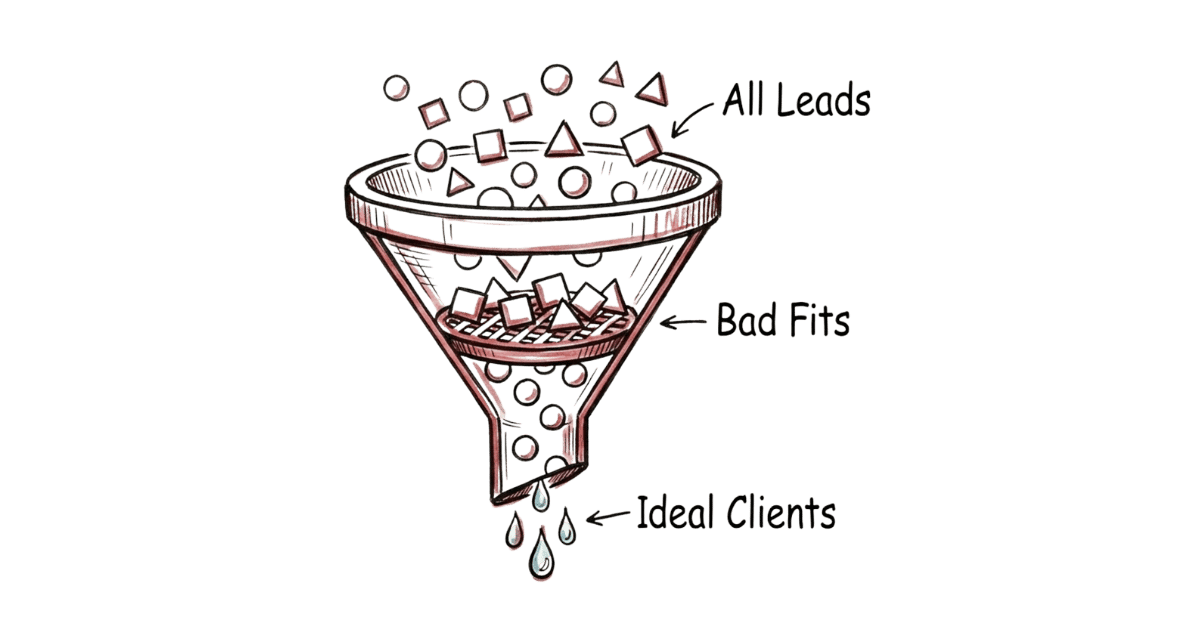 A funnel that remove friction and add filter
To do that, ask yourself:
- Who are my best customers? What questions do they typically ask me before committing?
- Who are my worst customers?
- What do my best customers value most about working with me?
A great place to find these answers are in your customers' reviews and feedbacks, as well as sales conversations that you have.
Then do one simple (but uncomfortable) thing:
Read your website as if you were your ideal customer, not the owner.
Ask:
- What would make me hesitate?
- What would I still be unsure about?
- What question would stop me from clicking "contact"?
Your job is not to say more. Your job is to answer those questions clearly.
Friction vs. filter scorecard
Use this to audit your own site.
For each row, ask: "Can a visitor answer this from my website today?"
- Can they tell if this is meant for them?
- Can they trust me without hunting for proof?
- Do they know what happens after they contact me?
- Do I state who I work with (or who I don't)?
- Is project size, budget, or process mentioned where relevant?
Low clarity on any of these = a place to improve. No score needed. Just honesty about where your site stands.
If you work with an agency: how to evaluate them properly
A good agency doesn't just "build and maintain websites". That's the bare minimum.
A good agency should help you present your business clearly, reduce hesitation, and filter out poor-fit enquiries.
To do that, they must first understand why people hesitate to proceed in your industry.
Most bad website decisions aren't caused by bad intentions. They're caused by unclear evaluation.
If you want a deeper checklist, I wrote a separate guide onhow to evaluate a web design company before hiring one.
Red flags to watch out for
Be careful if an agency:
- Skipping diagnosis like jumping straight to redesign and promising results
- Aesthetics over decisions like animations, visuals, awards
- Business blindness like no questions about your goals or vague objectives
This usually means that they prioritise execution without the proper planning and thinking. You might get your website faster, but not the one that gives you the result you deserve.
How to sanity check an agency before you even talk to them
Visit their own website. Ask yourself:
- Is it clear?
- Does it answer obvious questions in your head?
- Do you know what happens after you contact them?
- How fast is their site load? If their site is slow, don't expect yours to be fast
- Look out for avoided questions such as pricing, delivery timeline, post-launch support and ownership and exit.
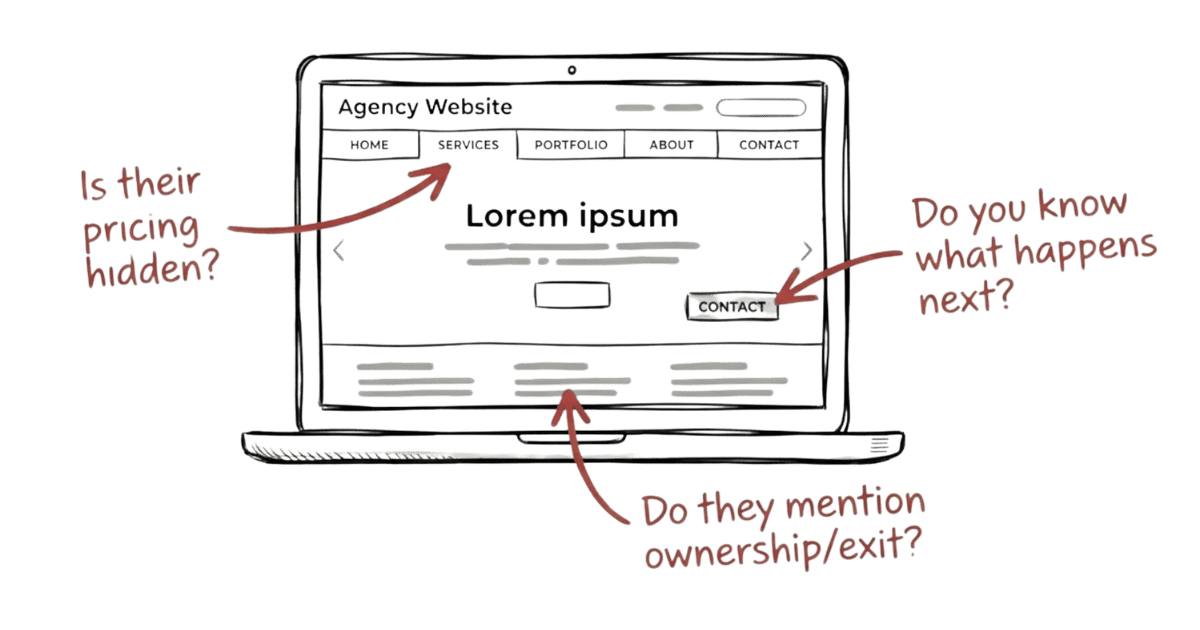
If they avoid clarity in their own site, it won't happen in your site as well.
How we measure up
We hold ourselves to the same standard. So you can sanity-check us too:
- Ownership and exit: You own the work; we document how you can migrate away if needed. No lock-in.
- Site performance: We run our own site through the same tests we recommend (see our blog post on website speed).
Questions worth asking in a meeting
- How do you decide what needs to be changed on my site?
- How do you decide what's good and shouldn't be changed?
- How do you know if hesitation is actually reduced?
- What happens after the site is delivered? Do you have any post-delivery support?
- What do I own, and how do I migrate out of your agency if needed?
- Do I have any monthly costs such as hosting to pay after the site is delivered?
Good agencies welcome these questions. Bad ones will get uncomfortable.
Choosing the right next step
You now know what matters. The only question left is how directly you want to get there.
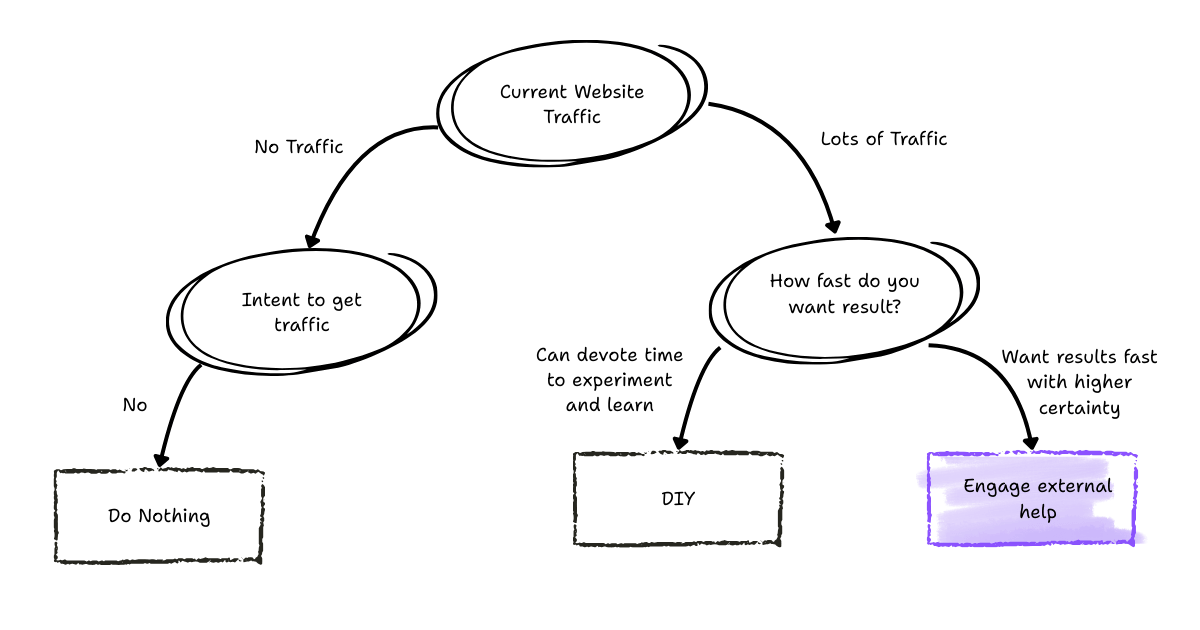 A decision tree to help you choose the right next step
The Decision
How you move forward from here
If you've read this far, one thing is clear: you don't see your website as just "online presence".
You see it as part of how people decide whether to trust you. That already puts you ahead of most businesses.
At this point, you have three real options. All of them work. They differ in how long it takes you to reach clarity.
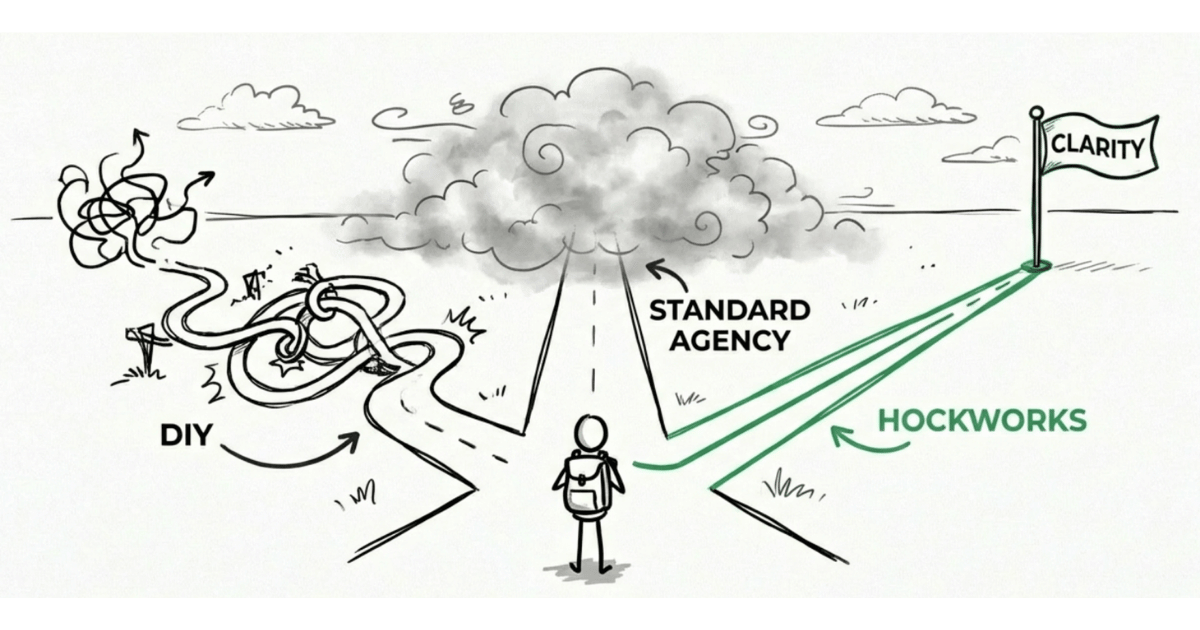
Option 1: Do it yourself
You now have the mental model, the principles, and the questions that matter.
This path makes sense if you like experimenting, are comfortable moving slowly, and will commit the time and resources.
The main trade-off is speed: when you evaluate your own site, blind spots are hard to see because you're too close to it.
Estimate how much you might be leaving on the table each month.
Option 2: Work with another agency
You can engage an agency to move faster.
Some will agree with this decision-first approach; some won't.
That doesn't make them bad. But it means you will spend time explaining this way of thinking, aligning expectations, and correcting course later. The difference isn't cost or capability.
Misalignment always costs more time and money.
Option 3: Work with me
If this guide resonates, the hardest part is already done.
We agree on what a website is for, what matters first, and what to ignore.
What I offer isn't just execution. It's a shorter path to clarity.
Patterns surface faster, hesitation becomes visible sooner, unnecessary changes are avoided. The difference isn't what gets built.
It's how quickly your website starts working the way it should.
A practical next step: 15-minute assess-fit call
Not a sales call. Not a pitch. We will cover three things:
- Your situation - The current issue with your website and what you're trying to achieve.
- What's possible - What can be done and what it would take (including investment).
- Next step - A clear next step, whether we work together or not.
Clarity guarantee
Whether or not we work together, you'll leave with at least one concrete takeaway about your site's friction or filters.
The difference isn't the cost or capability. It's how long it takes for you to stop guessing and start seeing results.
There's no pressure to decide now. But clarity tends to compound.