5 Message Testing Methods With Channel Checklists for Homepage Wins
Campaign focused catalog of message testing methods, with channel checklists and best for decision rules. Steps to turn test winners into prioritized...
Use five message-testing families: A/B and split testing, concept testing (monadic and comparison), survey choice methods built on PME, PAS, and MaxDiff, qualitative probes, and channel or sandbox checks. Match the method to the decision: A/B for CTA and subject-line tweaks, concept testing for positioning, MaxDiff when you’re juggling many claims. Whatever you pick, randomize your sample, predefine your success metric, and run enough replications to trust the result.
TL;DR:
- Use small sample sizes and randomization for A/B and multivariate tests to ensure reliable results without wasting traffic.
- Match testing methods to decision types, using quick A/B tests for calls-to-action and concept testing for positioning to gather both speed and insight.
- Prioritize testing one variable at a time with clear manipulation statements to accurately isolate what influences message effectiveness.
- Combine quantitative message scores with brief qualitative probes to improve understanding of why certain messages outperform others.
- Translate test results into homepage or campaign changes by placing top-rated claims prominently, based on clear evidence from prior testing.
Table of Contents
- A quick-reference catalog of message testing methods
- Setting up A/B, split and multivariate tests without wasting traffic
- Concept testing: monadic, comparison and sequential monadic explained
- Using PME, PAS and MaxDiff to predict what actually works
- Why a five-minute conversation beats a bigger survey sometimes
- Checking your messages work before they ever reach a customer
- Avoiding the statistical traps that produce false winners
- Building message treatments that actually isolate what you’re testing
- How test results turn into homepage changes that convert
- Make message testing a habit, not an event
- How Hockworks turns tested messages into homepage results
- FAQ
- Sources
A quick-reference catalog of message testing methods
Before you commit a week to any single test, it helps to see the whole menu. Some methods are fast and cheap but shallow. Others take longer and cost more, but they tell you why a message works, not just that it does.
- A/B testing: compares two message variants head-to-head; best for CTA wording, subject lines, single-variable tweaks.
- Multivariate testing: tests combinations of multiple elements at once; best for mature campaigns with high traffic volume.
- Monadic testing: each respondent rates one concept in isolation; best for realistic, bias-free reactions to a single idea.
- Comparison testing: respondents see two or more concepts side by side; best for fast relative ranking.
- Sequential monadic: respondents rate concepts one at a time, in sequence; best for balancing realism with comparability.
- Proto-monadic: a monadic rating followed by a comparison task; best for getting both an absolute score and a ranking.
- PME and PAS surveys: perceived message effectiveness and perceived argument strength scales; best for predicting real-world impact cheaply.
- MaxDiff (best-worst scaling): forces trade-offs across many claims; best when you have more than six messages to prioritize.
- Cognitive probing: short interviews or open-text questions after a rating; best for explaining the “why” behind a score.
- Sandbox and preflight checks: simulated sends and previews; best for catching technical failures before launch.
The fastest methods (A/B, sandbox checks) tell you what happened. The slower ones (concept testing, cognitive probing) tell you why. A common, efficient pattern is to run a quantitative method first to find a leading candidate, then follow up with a short qualitative probe to understand what made it win.
Setting up A/B, split and multivariate tests without wasting traffic
A/B testing earns its popularity because it answers one clean question: does Version A or Version B perform better on a single, predefined metric? For practical examples and templates, see Influencer Outreach Message Templates That Get Replies. It’s the right tool when you’re testing one variable, like a subject line, a CTA verb, or an opening line. Multivariate testing, which tests combinations of multiple elements simultaneously, only pays off when you have enough volume to fill every combination with a meaningful sample. For most campaigns under a few thousand sends, stick with A/B.
- Decide your primary KPI before the test starts (open rate, click rate, reply rate) and resist the urge to switch metrics after you see results.
- Keep it to two or three variants. Beyond that, you dilute your sample and introduce comparison fatigue, where respondents (or algorithms) struggle to meaningfully differentiate options.
- Randomize assignment and block by any variable that could skew results, like time zone or device type.
- Run channel-specific checks: SMS has a hard length limit and lands with immediate visibility, so test the plain-text version exactly as it will render. Email needs authentication checks (SPF and DKIM) to avoid landing in spam before you even measure message effectiveness. Push notifications truncate differently on iOS and Android, so preview both.
- Simulate to send in a sandbox before it goes live, confirming links, tokens, and rendering all behave as expected.
Pro Tip: Lock your sample size and run time before launch, not after you peek at early results. Stopping early on a lead is one of the most common ways teams fool themselves.
Concept testing: monadic, comparison and sequential monadic explained
Concept testing earns its place when you’re validating a bigger idea than a single line of copy, things like a new positioning angle or a brand promise. The family splits into a few distinct approaches, each with its own trade-offs, as outlined in Shopify’s concept-testing overview.
- Monadic testing shows each respondent only one concept, which mimics how a real customer encounters your message and avoids anchoring bias, but requires a larger sample since each group only rates one thing.
- Comparison testing shows the same respondent two or more concepts, which is faster and cheaper, but risks order effects and isn’t how customers actually experience messages in the wild.
- Sequential monadic testing has each respondent rate concepts one at a time, which balances realism against comparability, and is a solid middle ground for most teams.
- Proto-monadic testing combines a monadic rating with a follow-up comparison, giving you both an absolute score and a relative ranking from the same respondent.
For sample design, randomize the order concepts appear in to cancel out order bias, and keep the number of concepts per respondent to three or fewer, since fatigue sets in fast. Concept testing is slower and pricier than a simple A/B split, but it’s the right tool for positioning decisions precisely because a line-level test can’t tell you whether the underlying idea resonates.
Using PME, PAS and MaxDiff to predict what actually works
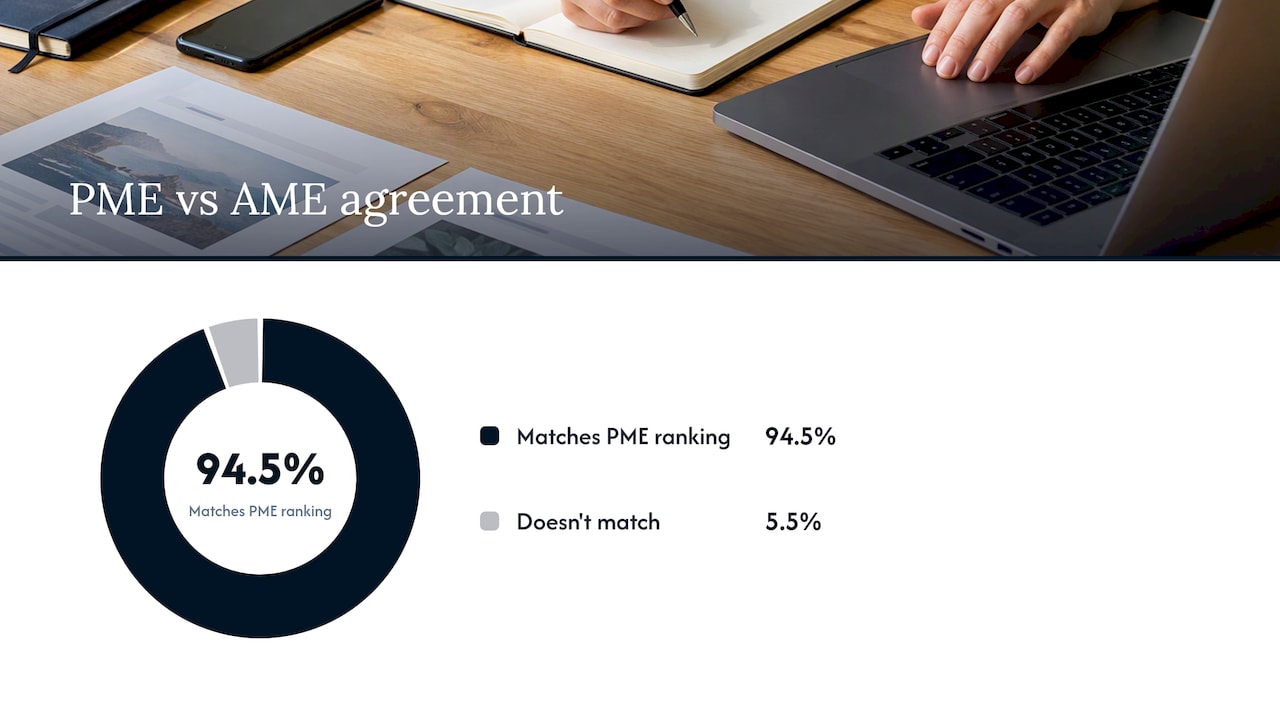
Perceived Message Effectiveness (PME) and Perceived Argument Strength (PAS) are survey scales that ask respondents to rate how convincing or effective a message feels. They matter because they’ve been shown to track real-world outcomes closely. One analysis found between-message PME and actual message effectiveness (AME) correlations above 0.824, with PME standing matching AME standing in 94.5% of message pairs tested.
94.5% message-pair agreement between PME rankings and actual effectiveness means a quick perceptual survey can serve as a reliable early filter before you invest in a larger behavioral test.
- Use simple Likert-scale ratings (1 to 5 or 1 to 7) when you’re testing a handful of message variants head-to-head.
- Switch to MaxDiff, or best-worst scaling, when you have more than six claims to prioritize. It forces respondents into trade-offs instead of letting everything score a politely high 4 out of 5.
- Randomize which messages each respondent sees and in what order, to prevent position bias from skewing results.
- Follow a quantitative score with one or two short open-text questions asking what stood out, positively or negatively, to add diagnostic depth.
A single PME score from one message instance can be misleading if that instance happens to be an outlier, which is why a validated protocol recommends testing multiple exemplars per message category rather than treating one variant as representative. Treat any single test as a data point, not a verdict, and replicate important wins before betting a full campaign on them.
Why a five-minute conversation beats a bigger survey sometimes
Numbers tell you which message won. They rarely tell you why. A short cognitive interview, or even a couple of open-text questions tacked onto a rating survey, fills that gap fast.
- After a respondent rates a message, ask one direct follow-up: “What made you choose that rating?” or “What word or phrase stood out to you?”
- Keep your sample small and purposeful. Ten to fifteen thoughtful verbatims from engaged respondents beat a hundred rushed one-word answers.
- Pair every quantitative winner with its qualitative notes before you write a recommendation. A message that scores well but confuses respondents about the actual offer needs a rewrite, not a victory lap.
This combination, a quick score followed by a short probe, turns an abstract ranking into a specific edit you can make to a headline or a proof point.
Checking your messages work before they ever reach a customer
Technical failures ruin more campaigns than weak copy does. A message that never renders, or triggers a broken link, never gets the chance to persuade anyone.
- Use an SMS testing sandbox to simulate delivery receipts, inbound replies, and error conditions without spending real send credits, a workflow Sinch’s texting sandbox supports directly.
- Set up content test groups for email and in-app messages so you can preview personalization tokens and rendering for specific user segments before a live send, a practice Braze’s testing documentation recommends as standard procedure.
- Keep separate API credentials for test and production environments, so a mistaken test send never reaches a real customer list.
- Automate your preflight checks inside your deployment pipeline so every campaign passes the same rendering, link, and token validation before launch.
Pro Tip: Build a five-item pre-send checklist, rendering, links, personalization tokens, accessibility, and sender authentication, and make it mandatory before anyone hits send.
Avoiding the statistical traps that produce false winners
A test that looks conclusive isn’t always trustworthy. The most common failure mode is treating a single message instance as if it represents an entire category of claims, which inflates confidence in results that might not replicate.
A correlation above 0.824 between PME and actual message effectiveness, found across between-message comparisons, is strong enough to support using perceptual pretesting as an early filter, but it’s still a correlation, not a guarantee for every individual message, according to the multilevel diagnosticity analysis.
- Randomize assignment and block by known confounders like time of day or audience segment.
- Use multilevel (nested) analysis when you’re testing multiple message instances within multiple categories, since a simple average can hide which category or which specific wording actually drove the result.
- Predefine your success criteria before the test runs, and resist adjusting the metric after seeing early numbers.
- Replicate any result that will drive a major campaign or homepage decision rather than acting on a single test.
- Escalate a finding to a site-level or campaign-level change only after it holds up across more than one test cycle.
Building message treatments that actually isolate what you’re testing
A test is only as good as the variants you put into it. If your “Version A” and “Version B” differ in tone, length, and claim all at once, you won’t know which change drove the result.
- Change one variable at a time: tone, specific claim, or call-to-action, never all three in the same comparison.
- Use natural language processing tools to check semantic similarity between variants and confirm they differ only in the intended dimension, an approach described in research on instrument fidelity for message treatments.
- Keep a version-controlled template for every test asset, so you can trace exactly what changed between rounds months later.
- Test more than one exemplar per condition. A single message representing an entire claim category risks the case-category confound, where one quirky wording choice gets credited (or blamed) for an effect that belongs to the whole category.
Pro Tip: Write a one-line “manipulation statement” for every test, naming the single variable you’re isolating, and check it against the final copy before launch.
How test results turn into homepage changes that convert
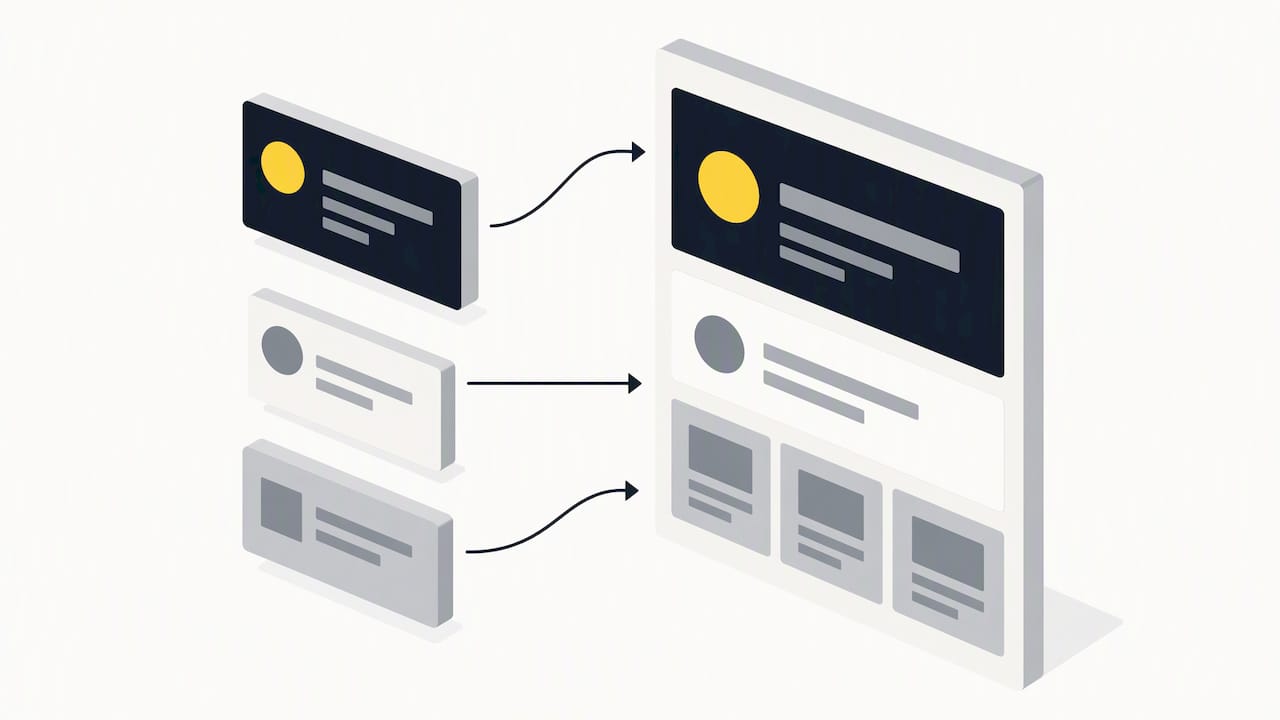
We read message tests the way a translator reads two languages: a strong PME score or a clear MaxDiff winner is a signal, but the real work is turning that signal into a specific homepage decision. A claim that wins a survey round usually belongs in the hero headline or the subheading directly beneath it. A proof point that respondents mention unprompted in open-text follow-ups usually belongs higher on the page, closer to the first scroll, not buried near the footer.
The friction we see most often isn’t a bad message. It’s a good message sitting in the wrong place, competing with three other claims for the same five seconds of attention. Test evidence resolves that argument quickly: whichever claim respondents rate highest earns the top spot, and the rest get reordered to support it instead of competing with it.
Make message testing a habit, not an event
Most teams treat message testing as something you do once, before a big launch, then forget. That’s backward. The teams that improve fastest run one lightweight test per campaign, even something as small as a two-variant subject line split, and keep every result in a central test library they can reference six months later.
Pairing a quick quantitative score with two short open-text probes gets you further than either alone, and it costs you ten extra minutes per test. Automate the boring preflight checks (rendering, links, tokens) so your team’s attention goes toward the judgment calls a machine can’t make: which claim actually matters to the person reading it.
— Fadly
How Hockworks turns tested messages into homepage results
Running the tests above tells you which claim wins. Turning that into a homepage that converts is a separate skill, and it’s the one we focus on. We take your test results, whether that’s a PME score, a MaxDiff ranking, or a handful of open-text verbatims, and translate them into a prioritized homepage blueprint that sequences your strongest claim into the hero section, moves proof points to where visitors actually hesitate, and rebuilds your call-to-action hierarchy around what the data says, not what felt right in a meeting.
A Homepage blueprint runs for a one-off fee, with additional services available—details on our pricing page. If you’re not sure your current homepage reflects what your messaging tests already told you, start with a free website review and see exactly where the friction sits.
FAQ
What is message testing?
Message testing is the practice of showing different versions of marketing copy or claims to a sample audience and measuring which one communicates most clearly or persuades most effectively. It ranges from quick A/B splits on a single headline to full concept tests comparing entire positioning strategies.
What are five common types of messages?
Marketers commonly test value propositions, calls-to-action, product or service claims, social proof statements, and urgency or offer-based messages. Each type tends to suit a different testing method: CTAs work well with simple A/B splits, while broader value propositions benefit from concept testing or MaxDiff when comparing several claims at once.
What are the four methods of marketing?
There’s no single fixed list, but marketing teams commonly rely on four broad testing approaches: split testing (A/B and multivariate), concept testing (monadic and comparison formats), survey-based methods (PME, PAS, and MaxDiff), and qualitative probing through interviews or open-text follow-ups. Most campaigns combine at least two of these rather than relying on just one.
What are the five T’s of email marketing?
Definitions of the “five T’s” vary across sources, but a common version includes Tease, Target, Teach, Test, and Track, covering how a message grabs attention, reaches the right audience, delivers value, gets validated before launch, and gets measured afterward. The “test” step is exactly where methods like A/B splits and PME surveys fit into the broader email workflow.
Sources
- Persuasion with precision: Using natural language processing to improve instrument fidelity for risk communication experimental treatments — PMC
- Exa
- Texting sandbox: SMS API testing & simulation | Sinch
- Send test messages — Braze documentation
Recommended

About the author
Thiam Hock is the founder of Hockworks, a Singapore-based digital advisory focused on clarity-driven websites. He works with service businesses to design websites that guide decisions, filter the right enquiries and reduce hesitation. His perspective centres on positioning, differentiation and how visitors actually make decisions in competitive markets.
Read more about Thiam Hock →